
Blog · Kitchen & Recipes
How to Make Cookie Glaze? Consistency and Decoration
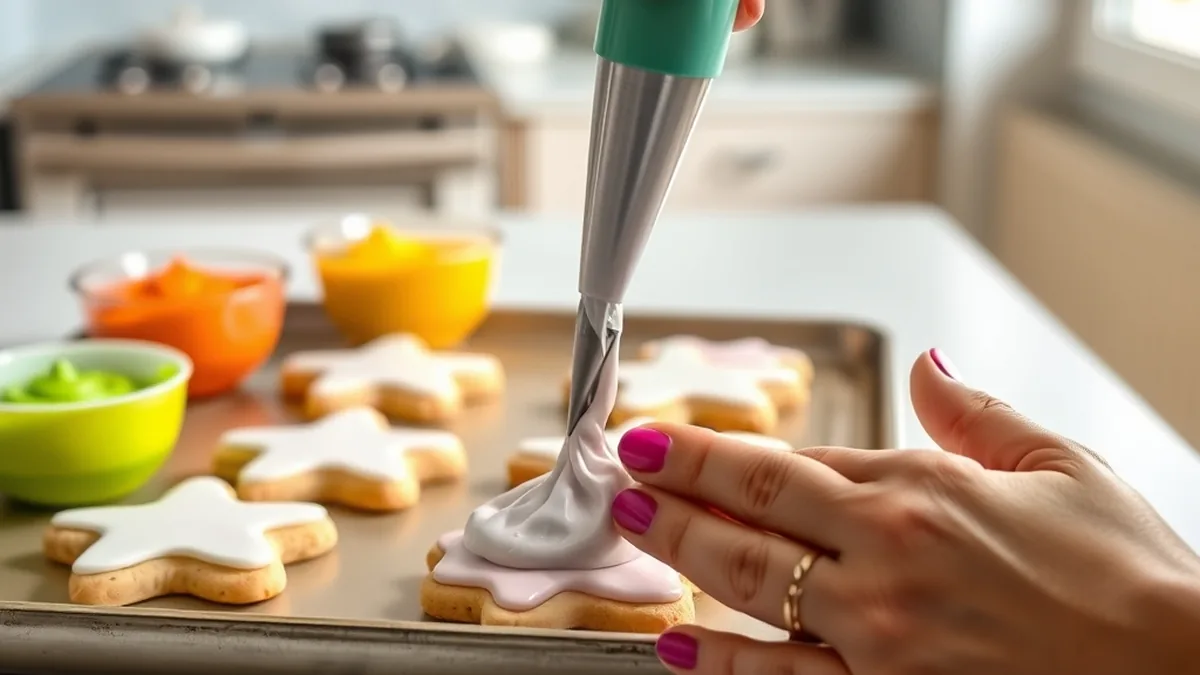
There are two main ways to make cookie glaze. Simple glaze, prepared by adding water or lemon juice spoon by spoon to the powdered sugar; it takes five minutes and leaves a thin, slightly glossy layer on the cookie's surface. Royal icing is made by whipping powdered sugar with egg white; it hardens as it dries and is ideal for sharp lines and raised details. Whichever you choose, the secret is in the consistency: you need a thick glaze for outlining and a more fluid one for filling in the center.
What is cookie glaze?
Glaze is a sweet coating spread over the cookie that hardens as it dries. It adds color and patterns to the cookie. Two types are used in home kitchens: simple glaze made with powdered sugar and liquid, and royal icing made with egg white.
How to make a simple glaze?
Materials:
- 200 g powdered sugar
- 2–3 tbsp water, milk, or lemon juice
How it's made:
- Sift the powdered sugar into a bowl. Clumped sugar leaves small granules in the glaze.
- Add the liquid a teaspoon at a time, not all at once, and stir well each time.
- Check the consistency with a spoon (see below).
Lemon juice gives the glaze a slight tang and a whiter color. Milk, on the other hand, creates a more opaque, creamy glaze. This glaze does not dry as hard as royal icing; it needs to rest for a few hours before stacking the cookies.
What is royal icing and how is it made?
Royal icing is a white coating made from lightly whipped egg whites, powdered sugar, and sometimes lemon juice, which dries hard. It is used on cookies, Christmas cakes, and gingerbread houses, where it also acts as an "edible glue" to hold pieces together. The ratio given as an example on Wikipedia is approximately 450 g of powdered sugar with one teaspoon each of lemon juice and glycerin for two egg whites; glycerin is not essential and is often not added in home kitchens (Wikipedia, Royal icing).
How it's made:
- Lightly whisk the egg whites until they become foamy.
- Add the sifted powdered sugar gradually.
- Add the lemon juice and whip on low speed until the mixture is glossy, thick, and forms stiff peaks.
- Cover unused glaze with plastic wrap so it makes direct contact; the surface exposed to air will dry and form a crust quickly.
Is raw egg white safe?
Traditional royal icing is made with raw egg whites, which carry a risk of salmonella, however low. Meringue powder (dried egg whites) or pasteurized liquid egg whites can be used instead for similar results. As an egg-free alternative, chickpea water (aquafaba) is also used (Wikipedia, Royal icing). If you don't want to take this risk at all, use pasteurized egg white or egg white powder.
Contour and filling consistency
The key to clean glaze decoration is preparing two consistencies:
- Contour consistency: Holds its shape when dropped from a spoon, flowing slowly like toothpaste. For drawing lines on cookie edges, writing, and fine details. If the glaze is too runny, add a little powdered sugar.
- Filling consistency: It is prepared by adding a few drops of water to the contour glaze. When you draw a line on the surface with a spoon, the line should disappear on its own within a few seconds. If it disappears too quickly, the glaze is too runny and will overflow the cookie edges; if it takes longer, the surface will not smooth out.
Application order: First, draw a border around the edge of the cookie with the contour consistency. Let it dry for a few minutes. Then squeeze the filling consistency inside this border and push it into the corners with a toothpick. If air bubbles form, pop them with the toothpick.
How to color glaze?
- Gel food coloring Use. Liquid paints thin the glaze and ruin its consistency.
- Add paint with a toothpick tip, just a tiny amount. The color may darken a bit while it sets; it’s good to stay a shade lighter than the tone you want.
- Prepare a separate small bowl and a separate piping bag for each color.
- If you want natural colors: cocoa gives brown, beet juice pink, turmeric yellow. Because natural dyes are liquid, you need to adjust the consistency with powdered sugar.
How long does glaze take to dry?
Drying time depends on the type of glaze, its thickness, and room humidity. A thin simple glaze becomes touch-dry faster than a thick layer of royal icing. Royal icing applied at filling consistency takes longer to fully harden; letting the cookies rest overnight before packaging or stacking is the safest route.
Do not put glazed cookies in the refrigerator; moisture will collect on the surface when removed, and colors may bleed. Dry them at room temperature in a cool, dry place.
Common glaze mistakes
- Glaze is dripping from the cookie: Too watery. Add powdered sugar or sketch the contour line first.
- Rough, striped surface: Too dark. Add a few drops of water.
- Colors are mixing: You added the second color before the first one dried. Apply the second color, which will be adjacent, only after the surface of the first color has set. If you want to mix them intentionally (marble pattern), do the opposite this time: place the two colors side by side while wet and pull them into each other with a toothpick.
- If the glaze is applied while the cookie is still warm: The glaze melts and spreads over the cookie surface. The cookie must be completely cooled.
- If the cookie shape is distorted: It’s a dough issue, not the glaze. To keep cut‑out cookies holding their shape in the oven, you need to chill the dough and the cut shapes before baking; details in our ghost cookie recipe we explained.
Which cookie shape is suitable for glazing?
The easiest shapes for glaze are those with soft, rounded edges and a wide, flat surface: bear, cloud, heart, umbrella. In these shapes, the outline is easy to draw and the fill spreads smoothly. Shapes with thin arms and sharp points (star, snowflake) require more patience.
Considering this when choosing a mold makes the job easier. Our molds are 3D‑printed in Antalya from PLA; as stated on the product pages they are for cutting dough only, not for oven use, and are hand‑washable. Wide‑bodied shapes like the bear and cow are a good starting point for first glaze trials. All molds in the kitchen category.
What to do with leftover glaze?
With leftover glaze you can make tiny sweets: pipe small flowers, stars or dots onto parchment paper, let them dry, then use them to decorate other cookies or cakes.
A general reminder when working with raw dough and raw eggs: The US Food and Drug Administration advises against tasting raw flour, dough, or batter and reminds us that baking is what kills the bacteria in flour and raw eggs (FDA).