
Blog · Books & Reading
How to Protect a Book? Yellowing, Folding, and Storage
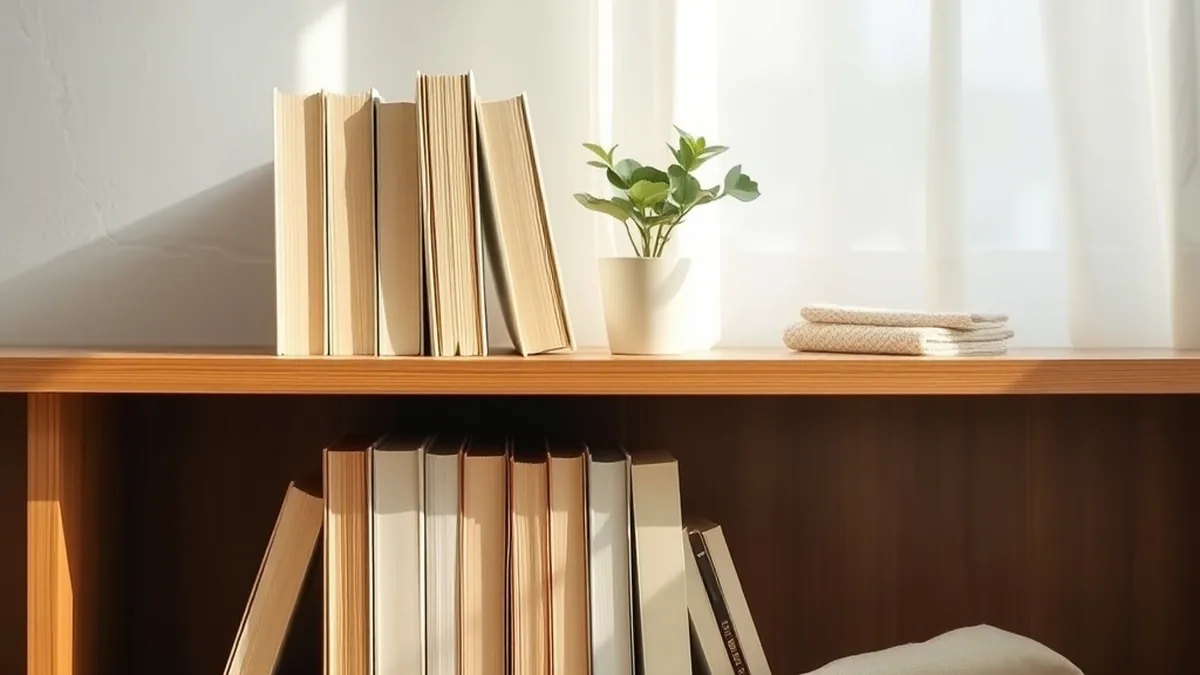
The way to protect a book is to keep it away from the four things that damage it: moisture, light, poor posture, and careless use. Store the book in a cool, dry room on a shelf out of direct sunlight, standing upright and supported. Do not pull it off the shelf by the spine; mark your place with a bookmark, not by dog-earing the page. These few habits will slow down page yellowing and prevent the binding from coming apart. Below, you will find the reason for each and how to do it.
Why do book pages yellow?
Yellowing comes from the paper’s own chemistry. According to a briefing prepared by the Library of Congress on paper deterioration, the cellulose fibers in paper shorten over time due to moisture and acid, producing new acid and feeding the decay. In dough prepared mechanically, lignin from wood remains and speeds up this process. Sulfur and nitrogen oxides in air pollution also add acid to the paper (Library of Congress).
The same source says paper is also damaged by light and oxidation, and light damage progresses faster on low‑quality paper. That’s why cheap paperback books yellow faster than hardcovers printed on good paper.
You can’t stop yellowing entirely, but you can control its rate. The Library of Congress notes that high‑quality paper can last a very long time when stored in a cool environment at 30–40% relative humidity (Library of Congress). Achieving these values at home can be difficult; the key is to avoid overly hot, humid, and sunny spots.
How to store a book? Choosing the right spot
Where the book sits at home matters more than how pretty the shelf looks.
- No basement, attic, or garage. The Library of Congress finds these areas unsuitable for storing valuables due to poor temperature and humidity control (Library of Congress).
- No sun‑exposed wall. The shelf opposite the window fades book spines and light penetrates the pages. A curtain or a wall in the shade is safer.
- Keep away from radiators and damp walls. Hot air dries the paper, while cold, humid exterior walls increase mold risk. Not fully attaching the shelf to the wall allows airflow.
- Watch the wooden shelf. The Library of Congress recommends metal shelving because acids in wood can transfer to paper; existing wooden shelves can be coated with an intermediate layer such as polyester film (Library of Congress). If you have a valuable or old book, keep this in mind.
How should books be positioned on a shelf?
Books on the shelf upright and supported must be upright. The Hampton University Library's preservation principles state that a book support (book cradle) provides vertical support, preventing covers from warping and spine hinges from loosening (Hampton University Library).
The same principles also add a few details:
- Don't pack it too tightly. A cramped shelf forces you to pull the book from the top of its spine, causing permanent damage.
- Do not place large books fore-edge up. Large books are placed spine-down, not fore-edge down. Books too large to fit on the shelf are stored horizontally, with a maximum of three stacked.
- Stack horizontal books on top of vertical books. When there's no space left, this is done a lot, but it crushes the row below.
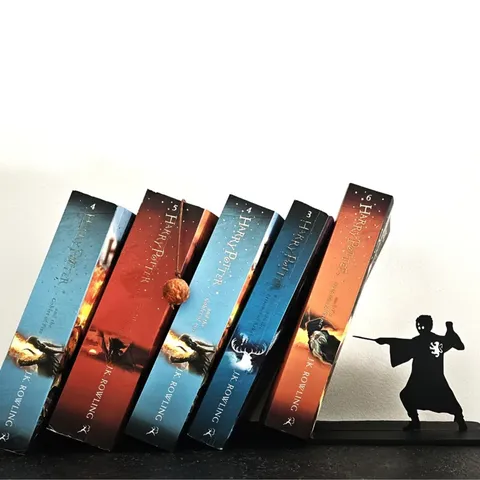
If a shelf is only half full, the books at the end lean sideways and eventually warp. Placing a bookend at the end of the row serves a functional purpose beyond just decoration. If you are thinking of reorganizing the shelf, you can also check out our article on bookshelf organization ideas.
How should you take a book off the shelf?
Most of us hook our index finger over the top of the spine and pull. Hampton University Library says this loosens the hinges or tears the spine and suggests another way: gently push the books on either side back, then grab the book by the middle of its spine (Hampton University Library).
Show the same courtesy when putting the book back. Separate neighboring books to make space; don’t force the book in.
Mark the spot without folding the page
Creasing a page corner leaves an irreversible tear in the paper. The University of Kansas Libraries ask readers to mark their place with a bookmark, avoid creasing corners, and not use tape, sticky notes, or paper clips (University of Kansas Libraries). Hampton University Library also notes that rubber bands, sticky notes, and paper clips cause permanent damage to books in collections (", ").Hampton University Library).
When choosing a bookmark, keep it simple: it should be thin and flat enough not to strain the pages when slipped in. Stuffing thick items like pens, glasses, or phones between pages will damage the binding.
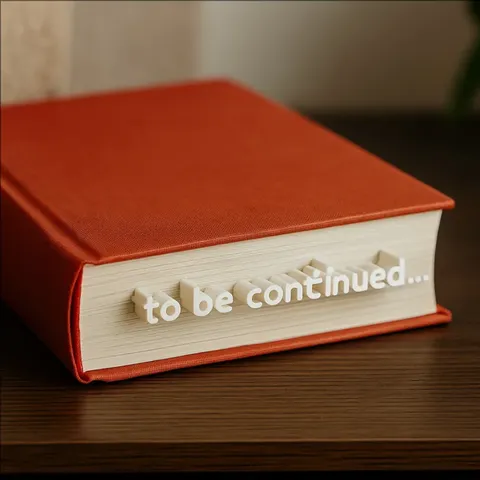
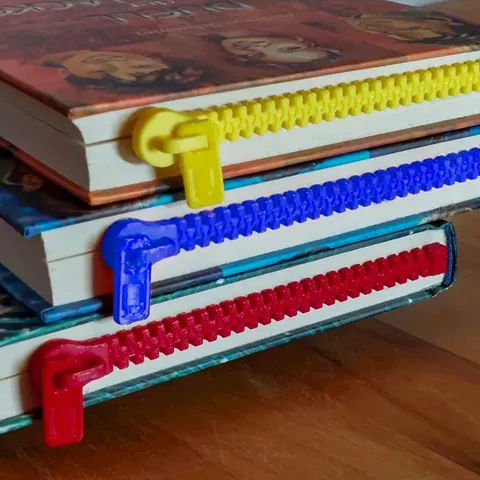
It helps to keep a few on hand so you always have a bookmark ready; every unfinished book gets its own. Bookmarks in different shapes From the book accessories category you can check. For example, if you want something simple, the place you left off is marked with embossed text white "To Be Continued" bookmark compatible with books of all sizes.
How do you protect the book while reading?
The moment a book wears out the most is while it’s being read.
- Keep food and drinks at a distance. Kansas University Libraries recommend not snacking or drinking while working with a book (University of Kansas Libraries. Çayın yanında okuyacaksan bardağı kitabın üstüne değil, yan sehpaya koy.
- Protect from rain, sun, and heat. The same library wants to protect borrowed books from rain, humidity, sun, heat, pets, and smoke. If you’ll carry them in a bag, a cloth sleeve or bag will do the job.
- Do not open the book all the way to the end. Placing a brand‑new, tightly bound book on a table and flattening it can damage the spine. Be careful with the book during photocopying and scanning.
- Don’t leave the book face‑down open. Turning the book upside down and leaving it causes strain at that exact spot on your back. That’s what a bookmark is for.
- Hold with clean, dry hands. Oil and moisture on your hands can leave marks, especially on the page edges.
If you need to keep books in a box
You may need to box your books due to moving or limited space. The Library of Congress recommends using acid-free and lignin-free boxes for books to be stored long-term (Library of Congress). This may not always be possible at home; however, there are a few simple rules:
- Place the box in one of your living rooms, not the basement, attic, or garage.
- Place books in the box standing up or spine‑down; don’t stack the front edges on top of each other.
- Don’t overfill the box, but leave some space for your books to tumble.
- Occasionally open the box and check for a damp smell or any stains.
If you have an old or valuable book
Trying to repair a yellowed, stained, or detached‑cover old book at home often does more harm. Taping is the most common mistake; tape leaves marks over time. If the book is truly valuable to you, keep it as is in a cool, dark place and consult a book‑restoration professional or conservator.
You don’t need that much care for the books you read daily. A shaded shelf, a book holder at the end of the row, and a bookmark every half‑book are enough to keep your books in great condition for years. If you want to arrange the spot where you read, a “reading nook” sign can help.